Circular Services: A Practical Guide for Businesses
Introduction: A Pragmatic Approach to Circular Services
A slightly different article today.
We've been talking lately with companies that are thinking about integrating circular services.
Sometimes, it's already well advanced at their end, and they're wondering how to improve it.
Sometimes, it's still just an idea, something floating in the air without knowing exactly how to go about it.
Or even if it's really worth it.
So we're going to keep things very simple and forget the grand speeches about the future of the planet.
Guide Objective
This guide gives you a pragmatic view of circular services, based on our field experience with dozens of companies. No theory, just concrete facts.
Definition: What is a Circular Service?
First, what exactly is a circular service?
We hear everything and its opposite, but basically, it's just another way of seeing the value of a product or service.
Instead of selling something just once, we seek to maximize its usage over time.
Fundamental Principle
A circular service transforms the customer relationship from a one-time purchase to an ongoing relationship, maximizing the value extracted from each product or service.
Main Types of Circular Services
This can mean:
- Renting your products instead of selling them
- Repairing them to extend their lifespan
- Refurbishing them for a second use
- Selling them second-hand through your own channels
- Offering preventive maintenance services
In short, extending their lifespan and real utility as much as possible. Nothing more, nothing less.
Concrete Examples by Sector
| Sector | Typical Circular Service | Customer Benefit |
|---|---|---|
| Industrial equipment | Rental + maintenance | No asset immobilization, operational guarantee |
| Office furniture | Leasing with buyback | Flexibility, easy renewal |
| Electronics | Certified refurbishment | Reduced price, maintained warranty |
| Professional textiles | All-inclusive service | Outsourced management, guaranteed hygiene |
Key Differences from Traditional Models
Circular services are distinguished by:
- Recurrence: revenue spread over time
- Extended responsibility: you remain owner of the lifecycle
- Usage optimization: maximizing utilization rather than sales
- Ongoing relationship: permanent contact with the customer
Profitability: The Central Question of Circular Services
Obviously, the big question is the profitability of circular services.
We're not going to pretend it's necessarily magical or miraculous.
It can be in some cases, yes, but not always.
Factors Influencing Profitability
It depends a lot on:
- Your sector of activity
- The nature of your products
- Your customer profile
- Your internal organization
- Your logistics capabilities
Beware of Misconceptions
Circularity is not automatically profitable. A thorough analysis of your specific context is essential before any launch.
Benefits Observed When Done Right
What we know, however, is that when done intelligently, it often generates:
- Regular and predictable revenues
- Enhanced customer loyalty
- A brand image consistent with current expectations
But again, this is measured case by case.
Key Performance Indicators
To measure the success of your circular services, monitor:
- Customer retention rate: target > 85%
- Customer lifetime value (LTV): 2-5x multiplication vs traditional model
- Recurring margin: monthly revenue stability
- Usage rate: optimization of your assets
Essential Metrics
Focus on revenue recurrence and customer satisfaction rather than one-time sales volume.
Detailed Cost-Benefit Analysis
| Cost Type | Initial Impact | Long-term Impact |
|---|---|---|
| Technology investment | High | Progressive amortization |
| Team training | Medium | Growing ROI |
| Logistics management | High | Experience-based optimization |
| Customer service | Medium | Compensatory loyalty |
Our Approach: Tailored Solutions
The best solutions we've been able to support are those we've built with our clients, starting from their reality.
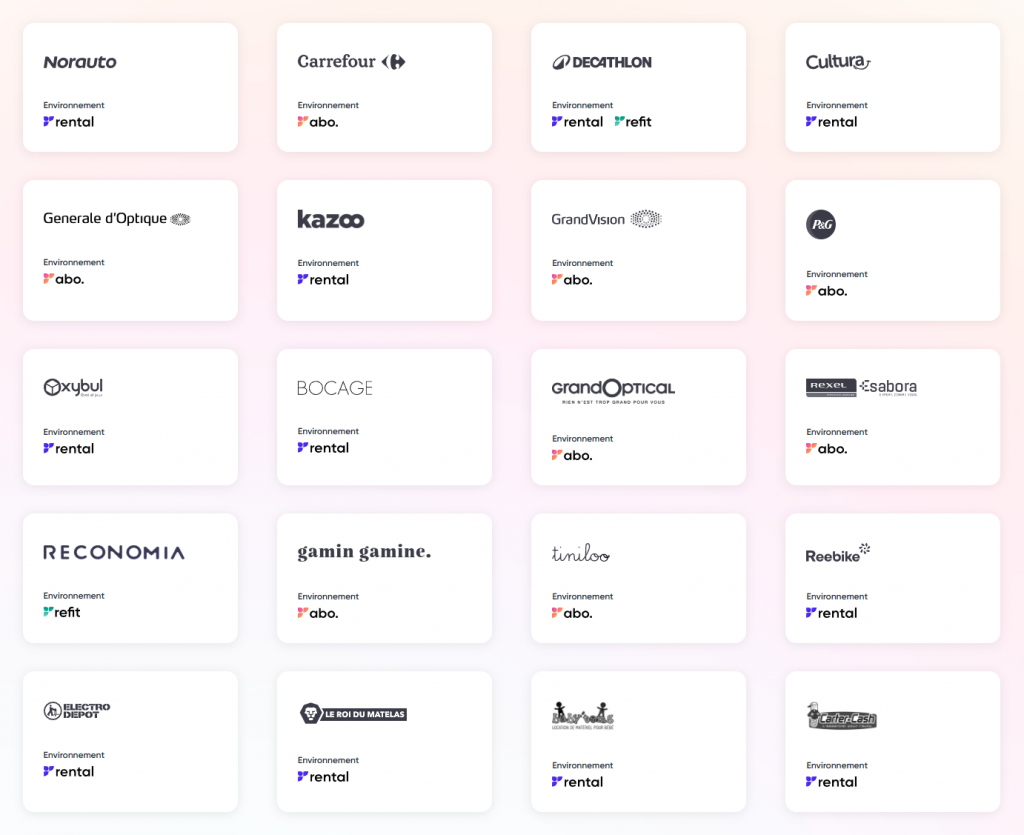
Each company has its constraints, opportunities, and specificities.
What works for one won't necessarily work for another.
Our Support Principles
- Start from existing: analyze what already works
- Test small: validate before massive deployment
- Measure impact: continuous ROI and customer satisfaction
- Adapt constantly: flexibility based on field feedback
Customization Methodology
Our tailored approach includes:
- Existing audit: strengths, weaknesses, opportunities
- Scenario modeling: 3-4 adapted options
- Pilot test: validation on a restricted segment
- Progressive deployment: controlled scaling
- Continuous optimization: data-based adjustments
Competitive Advantage
This personalized approach guarantees a solution perfectly adapted to your context, reducing failure risks and maximizing success chances.
Our Expertise: 10 Years of Circular Services
What we're offering you today is to discuss it together.
On our side, we've built a real toolkit for circular services.
Our Range of Proven Solutions
In over ten years, we've gone through:
- Subscription: recurring and predictable models
- Rental: optimized temporary access
- Refurbishment: technical second life
- Second-hand: used product valorization
Our Added Value
Today, we have the concrete experience and legitimacy to help any company seriously advance toward a circular model.
Developed Expertise Sectors
Our experience covers:
- Manufacturing industry: heavy equipment, tooling
- B2B services: software solutions, consulting
- Distribution: retail, e-commerce
- Commercial real estate: flexible spaces, coworking
Client Experience Feedback
Results obtained with our clients:
- Average 45% increase in customer lifetime value
- 60% reduction in revenue volatility
- 35% improvement in customer satisfaction
- Significant competitive differentiation in their market
Critical Success Factors
Success strongly depends on management commitment and internal process adaptation. Without these prerequisites, even the best strategy will fail.
Methodology: A Personalized Diagnosis
Our Initial Support Process
Duration: Thirty minutes to:
- Analyze where you currently stand
- Identify what you've already implemented or not
- Evaluate what might be relevant for you
- Define how it could work concretely
Possible Outcomes from Our Exchange
Maybe at the end of the conversation:
- You'll tell yourself it's the right time to get started
- You'll decide to wait a bit longer and mature the project
- You'll have at least advanced your strategic thinking
But at least, you'll have advanced in your thinking.
Our Evaluation Process
| Stage | Duration | Objective | Deliverable |
|---|---|---|---|
| Initial diagnosis | 30 min | Understand your context | Opportunity summary |
| In-depth analysis | 2-3h | Model scenarios | Detailed business case |
| Prototype | 2-4 weeks | Test feasibility | Functional MVP |
| Deployment | 3-6 months | Complete implementation | Operational solution |
Key Questions from Our Diagnosis
We systematically explore:
- Your current business model: revenue, margins, cycles
- Your customer relationships: frequency, duration, satisfaction
- Your operational capabilities: logistics, after-sales, teams
- Your competitive positioning: differentiation, pricing
- Your strategic objectives: growth, profitability, image
Optimal Preparation
To maximize the efficiency of our diagnosis, prepare these elements before our exchange.
Strategic Advantages: Why Invest Now?
By developing a circular service, you strengthen your ability to:
- Weather economic and sector crises
- Secure your resources and revenue streams
- Stay competitive in a world where adaptability is no longer optional
Strategic Opportunity
In an uncertain economic context, circular services offer revenue diversification and better resilience against market fluctuations.
Observed Competitive Benefits
Companies that have adopted circular services report:
- 30-50% reduction in revenue volatility
- 40-60% increase in customer value
- 25-35% improvement in customer satisfaction
- Strong differentiation against traditional competition
Critical Timing
Companies that delay adopting these models risk being outpaced by more agile, service-oriented competitors.
Favorable Market Trends
The current context favors circular services:
- Growing regulatory pressure on circular economy
- Customer expectations evolving toward sustainability
- Raw material costs constantly rising
- Digitalization facilitating service models
Risks of Inaction
Not evolving toward circular services exposes to:
- Market share loss to innovative competitors
- Increased dependence on raw material fluctuations
- Brand image misaligned with societal expectations
- Vulnerability to supply crises
Comparison Table: Traditional vs Circular Models
| Criteria | Traditional Model | Circular Model |
|---|---|---|
| Revenue type | One-time, variable | Recurring, predictable |
| Customer relationship | Transactional | Continuous and deepened |
| Inventory management | Fast rotation needed | Usage optimization |
| Environmental impact | Linear (extraction-use-waste) | Circular (reuse-valorization) |
| Barriers to entry | Low | Medium to high |
| Loyalty | Limited | Reinforced by ongoing relationship |
| Financial predictability | Low | High |
| Long-term margin | Decreasing | Increasing |
Challenges to Anticipate
Main difficulties encountered:
- Internal cultural change: team training
- Initial investment: tools, processes, training
- Complexity management: multi-client, multi-product tracking
- Skills evolution: customer service, maintenance, logistics
Success Factors
Companies that succeed in their transition invest massively in team training and internal process adaptation.
Solutions to Identified Challenges
For each challenge, we propose:
| Challenge | ZIQY Solution | Benefit |
|---|---|---|
| Team training | Dedicated support program | Rapid skill development |
| Operational complexity | Integrated management tools | Process simplification |
| Initial investment | Progressive deployment | Cost spreading |
| Change resistance | Personalized change management | Team buy-in |
Take Action: Contact Us
So there you have it, if the subject interests you, if you're asking yourself these questions, contact us.
We'll organize a simple and direct discussion.
No pressure, to move forward together on this important subject.

Next Step
Click the button above to book your discussion slot with our circular services experts.
What You Can Expect from Our Exchange
- Free evaluation of your circular potential
- Experience feedback on cases similar to yours
- Personalized roadmap for your transition
- Estimation of investments and expected returns
Recommended Preparation
To optimize our exchange, prepare your questions about your current model, operational constraints, and growth objectives.
Our Commitment
During this exchange, we commit to:
- Listen to your situation without judgment
- Share our expertise transparently
- Propose concrete and realistic solutions
- Respect your decision-making pace
Possible Follow-ups to Our Meeting
Depending on your needs and maturity, we can:
- Deepen the analysis with a complete diagnosis
- Conduct a pilot on a segment of your activity
- Guide you toward resources adapted to your situation
- Plan tailored support
No Obligation
This first discussion commits to nothing. It aims solely to give you the keys to make an informed decision about your circular services strategy.
Related Articles
Success Strategies in Bike Rental
7 (Simple) Keys to Rapidly Boost Your Rental Business
Just a few years ago, no one would have imagined renting a bike, a drill, or even a children's toy. Today, it has become almost natural.